Manual v Automatic
Grease traps are one of the most popular FOG (fats, oils and grease) management solutions, with Passive (Manual) and Automatic (GRU) traps being the most popular options for commercial kitchen operators looking to prevent grease related issues and fulfil compliance requirements.
They both do essentially the same job of separating FOG from wastewater though at a glance, Automatic (GRU) grease traps may seem very expensive compared to Manual (Passive) grease traps, however there are more factors to consider than just the initial cost of the unit!
This article will compare the two system types, explaining the main differences and the Pros and Cons of each system so the end user can make an informed buying decision and select the right system for their requirements.
Firstly, lets cover what each system does and understand what to expect from each type of unit.
Manual (Passive) grease trap
Traditional Manual (Passive) grease traps simply slow the flow of wastewater to allow it to cool and separate into 3 layers; FOG, solids and clear water. The FOG forms a “grease mat” at the top of the unit and solids either accumulate at the bottom of the unit or collect inside a strainer which is located just after the inlet. The clear water escapes via the outlet.
Automatic (GRU) Grease Traps
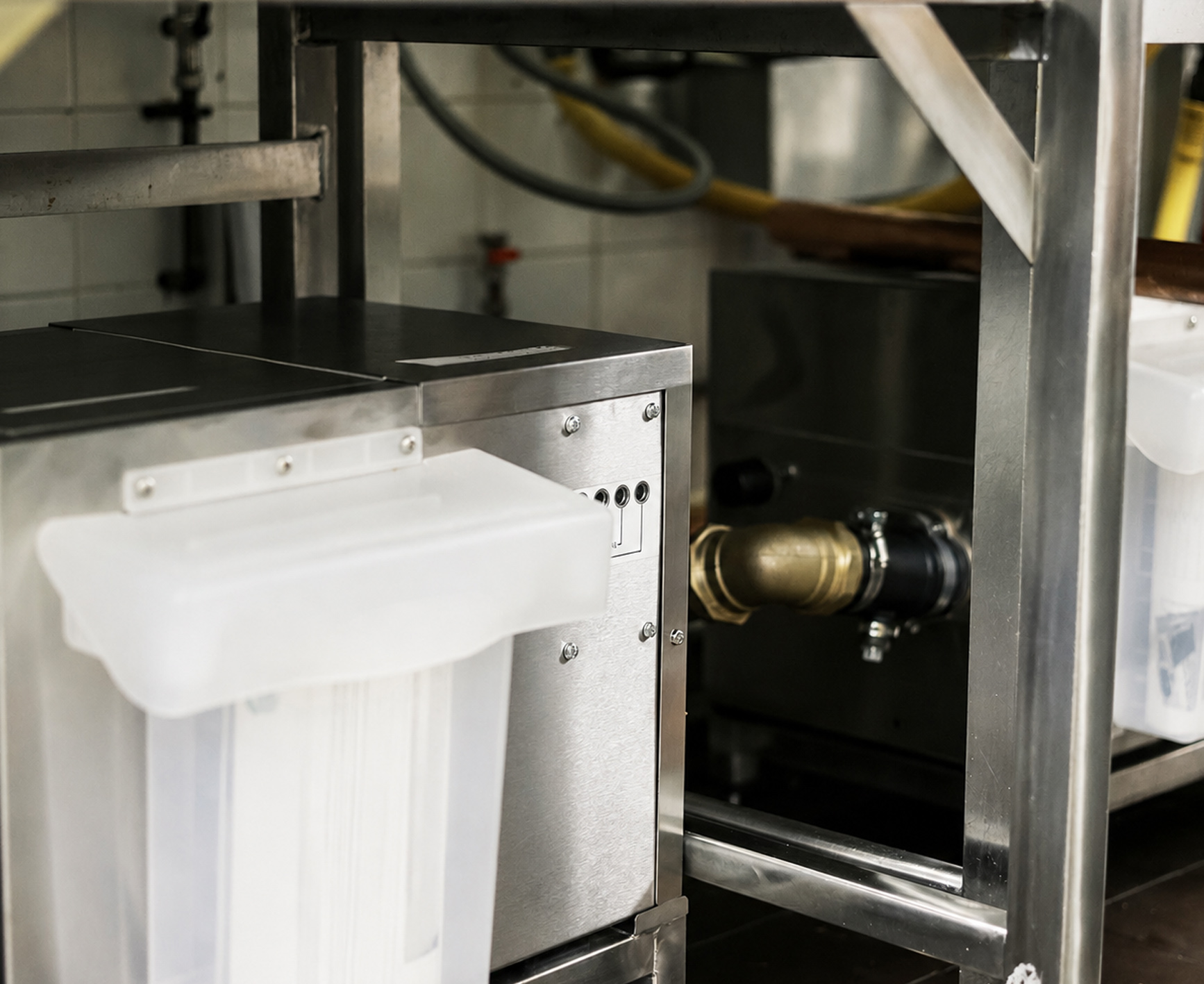
Automatic systems, also known as GRUs (Grease Removal Units), perform many of the same operations as a Manual grease trap. Much like a manual system the flow of wastewater is slowed to allow it to cool and separate though automatic systems almost always feature the addition of a removable strainer basket for solids collection. This means the wastewater inside the unit will mainly contain FOG with only small amounts of solid waste escaping the strainer and settling at the bottom of the unit.
The similarities between the Automatic and Passive models stop once the FOG separates and rises to the top inside the unit. Rather than letting the FOG form a “grease mat”, automatic system can re-heat or skim out the FOG automatically on a programmed schedule. The skimmed FOG is then transferred into a collector bin for easy removal and recycling.
So we know what each system does, lets delve into some comparison between the 2 systems, which may help with the selection decision. The 3 main area’s covered are:
• Efficiency & Performance
• Sustainability
• Cost
Efficiency
There is a direct correlation between how efficient a grease trap is and the amount of grease inside the system. The more kilograms of grease inside the unit, the less efficient the trap becomes, which impacts overall performance.
For this reason, Manual (Passive) grease traps are less efficient than Automatic (GRU) ones as the grease accumulates inside them until its either pumped out or emptied manually. As Automatic (GRU) traps skim and remove FOG on a scheduled basis, grease doesn’t build-up inside the unit meaning the system will maintain maximum efficiency and perform at a consistent level.
The graphs below give a visual representation of performance vs kilograms of grease based on 25kg traps connected to equipment producing 2.5kg of grease per day:
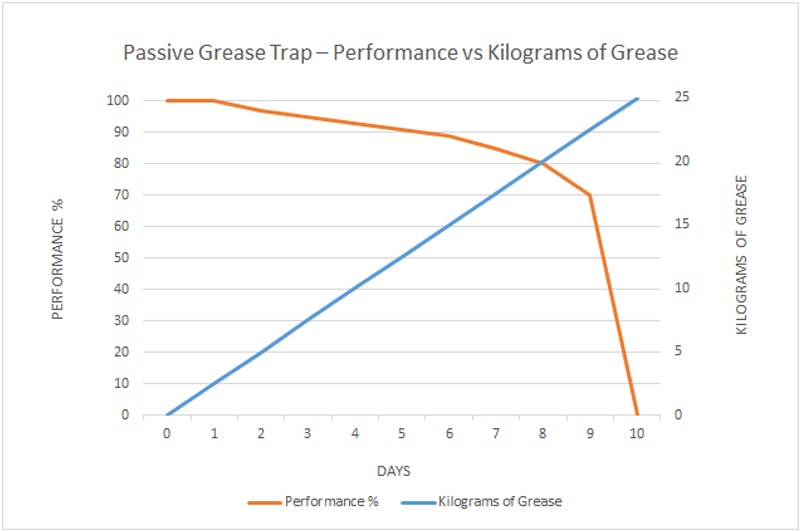
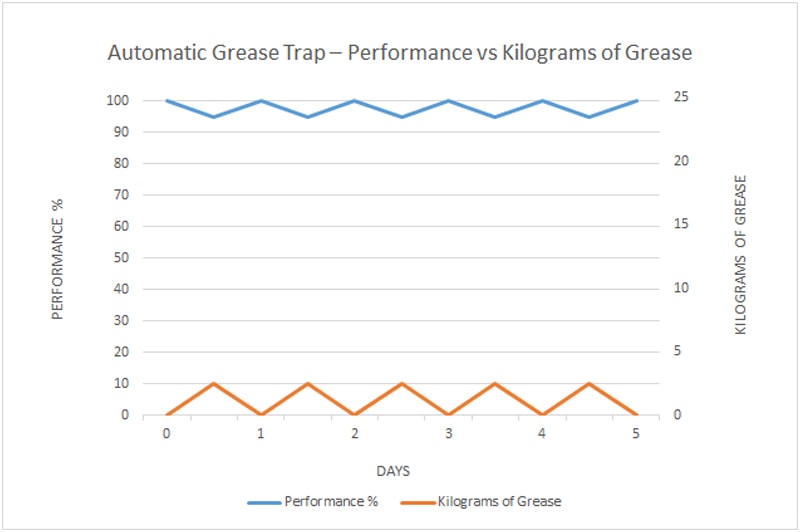
The above data demonstrates that the overall performance of the Manual (Passive) trap drops quickly once the amount of grease gets to a certain level, while the Automatic (GRU) trap maintains consistent performance.
Sustainability
Both systems are kind to the environment as they help prevent FOG entering the sewerage system but what happens to the recovered and pumped out waste?
With Manual (Passive) traps, the grease management service company who pump out the trap and will dispose of all substances removed from the trap. The grease will often be recycled into biodiesel and any solids will be disposed of in the correct manner, helping to keep our environment clean.
Automatic (GRU) traps remove grease and deposit it into a container in liquid form. This can then be collected along with other used cooking and waste oil by your relevant service provider. Potentially, if enough is produced, the removed grease from automatic traps can be sold as an additional revenue stream.
So, while both systems are eco-friendly, automatic traps edge ahead due to the potential of adding an extra source of income via selling removed grease.
Cost
Purchase price is usually the deciding factor between choosing a Manual (Passive) or Automatic (GRU) grease trap, however there are other costs which need to be considered when buying any type of grease trap. All the costs to consider are:
• Purchase Costs
• Daily Maintenance Costs
• Running Costs
• Pump Out Costs
The purchase cost of an Automatic (GRU) grease trap can be significantly more than the purchase cost of its Manual (Passive) equivalent. Manual (Passive) traps also have no moving parts meaning they need no daily maintenance and require no electricity to run, unlike Automatic (GRU) traps which need around 10 minutes of maintenance a day and require an electricity supply to function.
It looks like Manual (Passive) traps come out on top but the final consideration of pump out costs swing the comparison in the favour of Automatic (GRU) grease traps. Manual (Passive) traps require pumping out every 2-4 weeks at a typical cost of between £150 and £200, whereas Automatic (GRU) traps only require pumping out every 3-6 months at a similar cost. While you can increase the time between pump outs of Manual (Passive) traps to up to 8 weeks by adding a biological grease treatment fluid into the system or “dosing”, this adds to the purchase / install costs and to running costs. So, over the course of 3 years, automatic traps will be much cheaper overall.
Join Over 1000+ Companies with GreaseTech
Keeping Commercial Sites Flowing, Compliant and Operational
Grease Trap Supply
We supply reliable grease trap systems designed to suit your kitchen layout, usage levels and compliance requirements.
Learn more
Planned & Preventative Maintenance
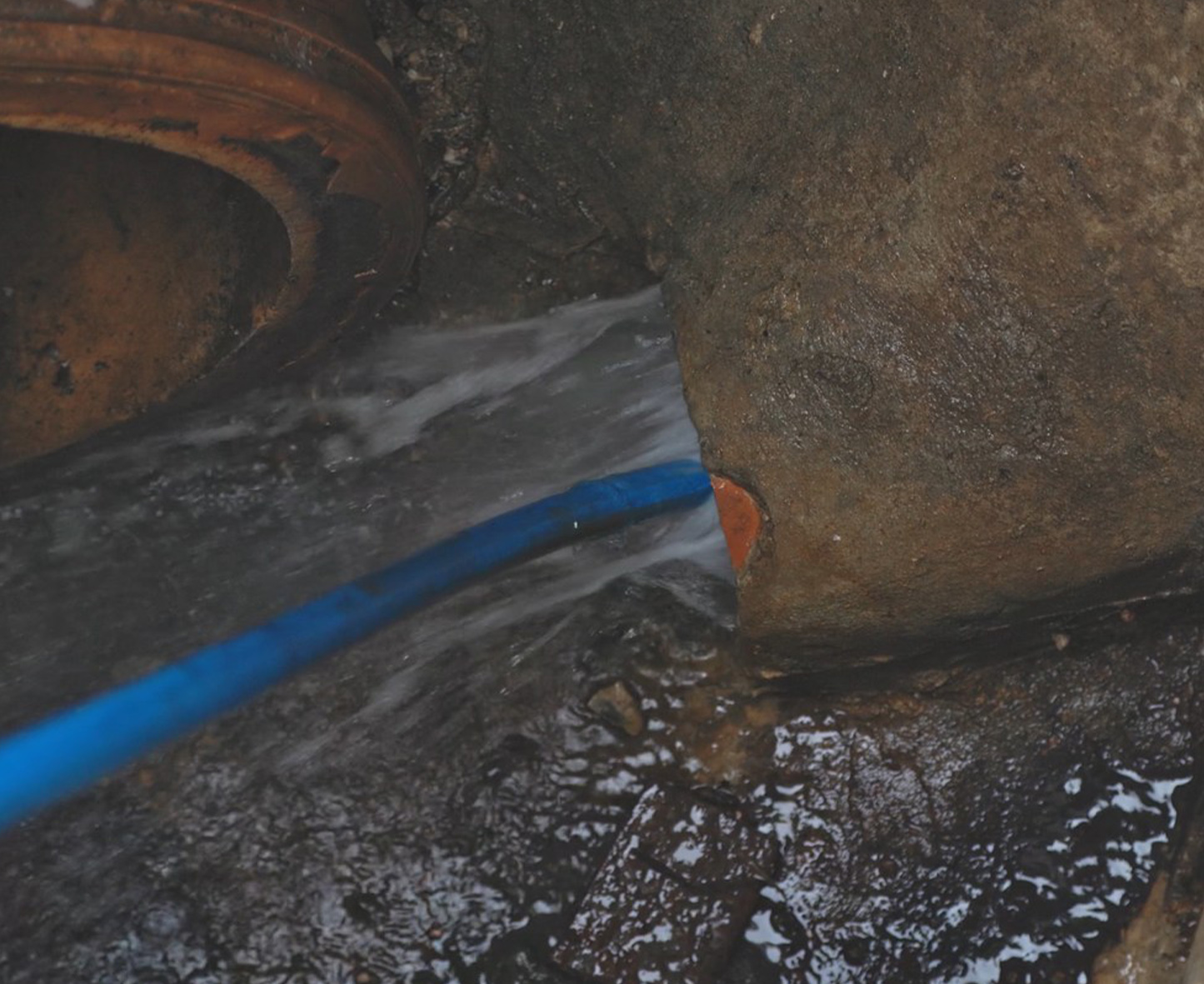
Scheduled inspections and proactive servicing help reduce blockages, prevent disruption and keep drainage systems operating reliably.
Learn more
Excavations
Careful site assessment and professional excavation allow damaged drainage systems to be exposed, repaired or replaced safely.
Learn more
Reactive Drainage
Fast-response drainage support helps resolve urgent blockages, overflows and operational issues before they cause further disruption.
Learn more
Site Descaling
Targeted descaling treatments remove scale build-up from pipework and systems, helping improve flow, performance and reliability.
Learn more
CCTV Surveys & Reporting
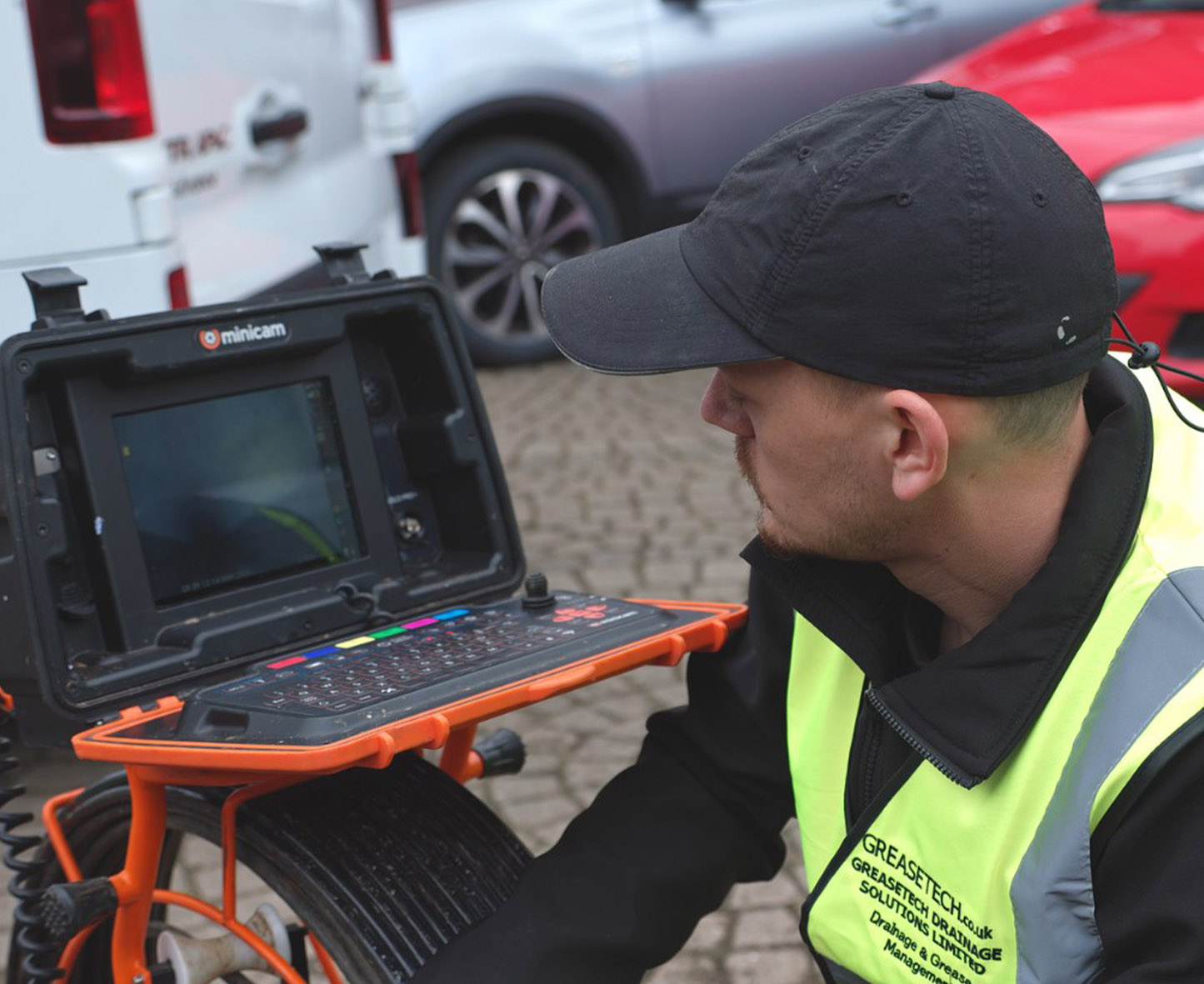
Detailed camera inspections and clear reporting identify drainage defects, blockages and structural issues with accuracy.
Learn more
No Dig Repairs
Trenchless repair methods restore damaged pipework without major excavation, helping reduce disruption, mess and downtime.
Learn more
Septic Tank Emptying
Safe waste removal and scheduled emptying help maintain septic systems and prevent overflows, odours and operational failures.
Learn more
Pump Station Desludge
Professional desludging and system cleaning remove waste build-up, helping pump stations operate effectively and reliably.
Learn more
Pump Station M&E Testing
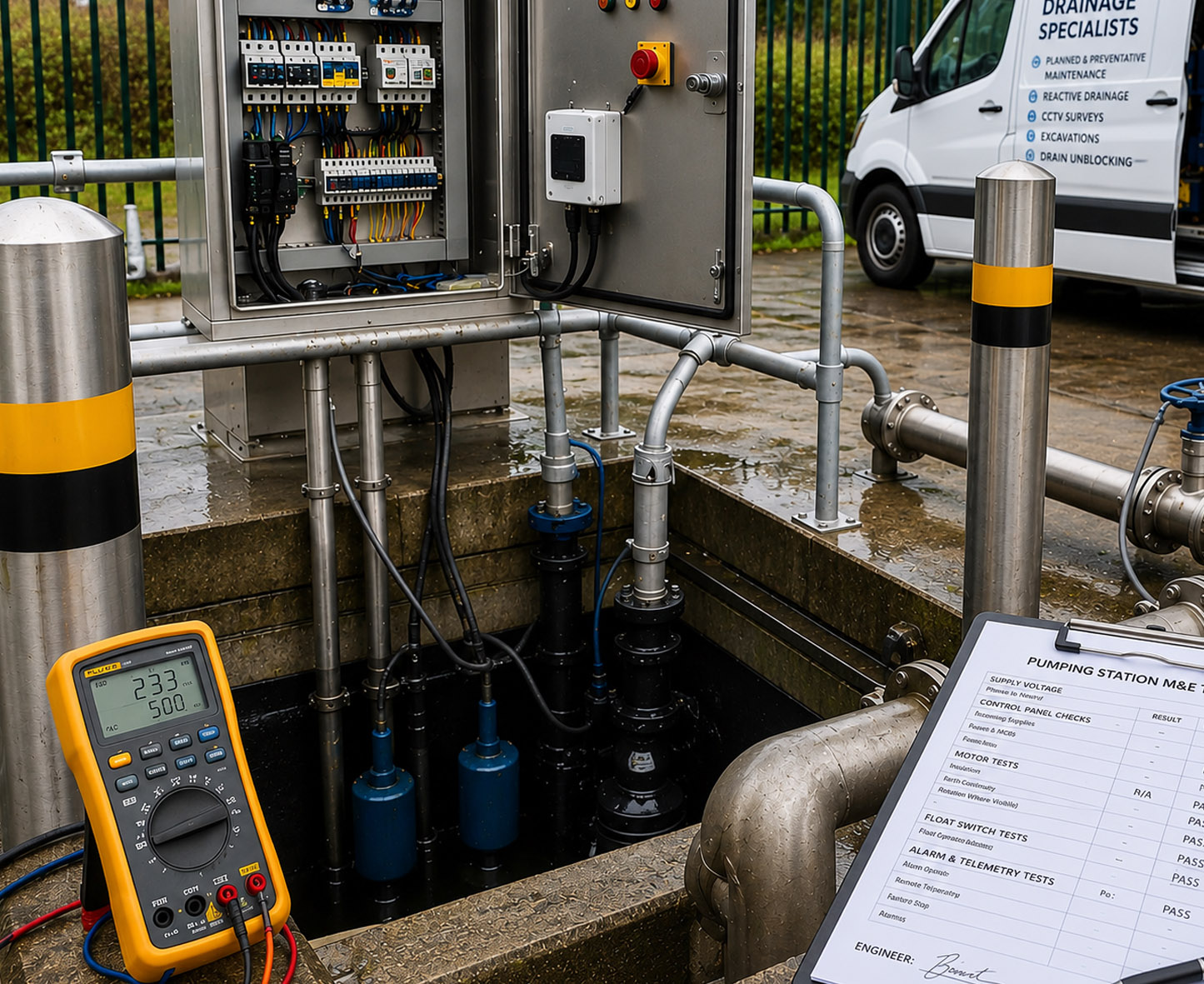
Mechanical and electrical testing checks pump performance, control panels and safety systems to identify potential faults.
Learn more
Sump Pump Repair & Maintenance
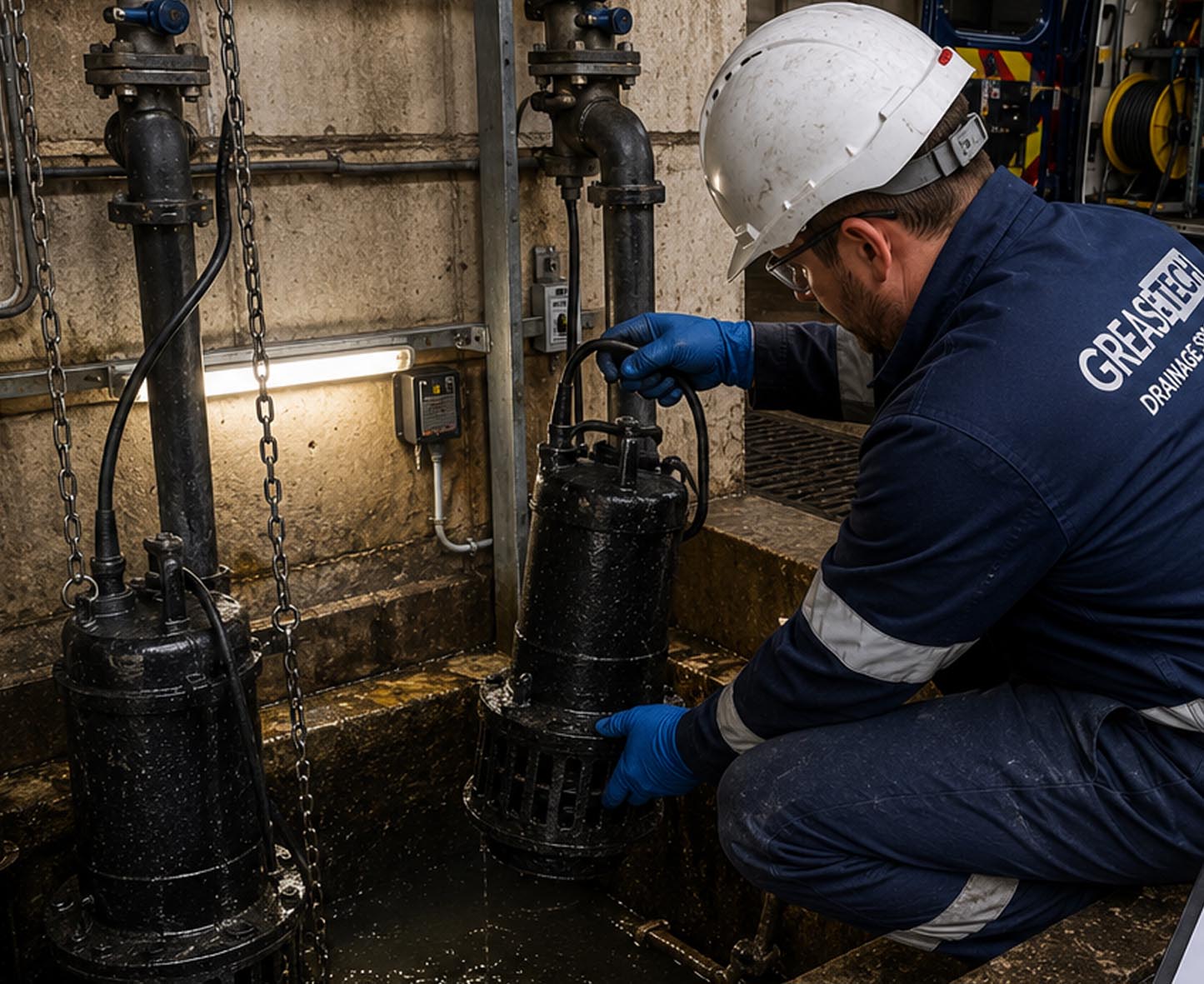
Inspection, servicing and repair help keep sump pumps working reliably and protect sites from water build-up.
Learn more

Regulatory Advice
We provide clear regulatory advice to help your business understand its drainage, grease and wastewater responsibilities.
Learn more
Grease Trap Installation
Our team installs grease traps safely and efficiently, helping your site manage fats, oils and grease from day one.
Learn more
Grease Trap Service
Regular servicing helps keep your grease trap working effectively, reducing odours, blockages and operational disruption.
Learn more
Grease Trap Repair
We identify and repair grease trap issues quickly, helping restore performance and prevent further problems on site.
Learn more

Legislative Guidance
We offer practical legislative guidance to help your site stay compliant, reduce risk and operate responsibly.
Learn moreWe offer 24/7 help
Yes, GreaseTech supports commercial sites across the UK with reliable drainage, grease management and compliance services. Whether you operate from a single location or manage multiple sites, our team can provide planned maintenance, reactive support and practical guidance to help keep your business running smoothly.
Yes, we provide responsive drainage support for urgent issues such as blockages, overflows, slow-running drains and unexpected system failures. Our aim is to attend quickly, identify the cause of the problem and carry out the necessary work to reduce disruption to your site.
Yes, we offer planned and preventative maintenance programmes designed around your site, usage and operational requirements. Regular inspections and servicing can help reduce emergency callouts, prevent recurring issues and keep drainage, grease and pump systems working efficiently.
Yes, we provide CCTV drainage surveys to inspect pipework, locate faults and identify issues such as blockages, damage, scale build-up or root ingress. After the survey, we can provide clear reporting and practical recommendations to help you decide on the most suitable next steps.
Yes, we support commercial kitchens with grease management services and practical compliance guidance. From grease trap installation, servicing and cleaning to advice on best practice, we help businesses manage fats, oils and grease responsibly while reducing the risk of blockages and disruption.